 21 Oct, 2026
Brain AVM Treatment: Symptoms, Diagnosis and Advanced Endovascular Care
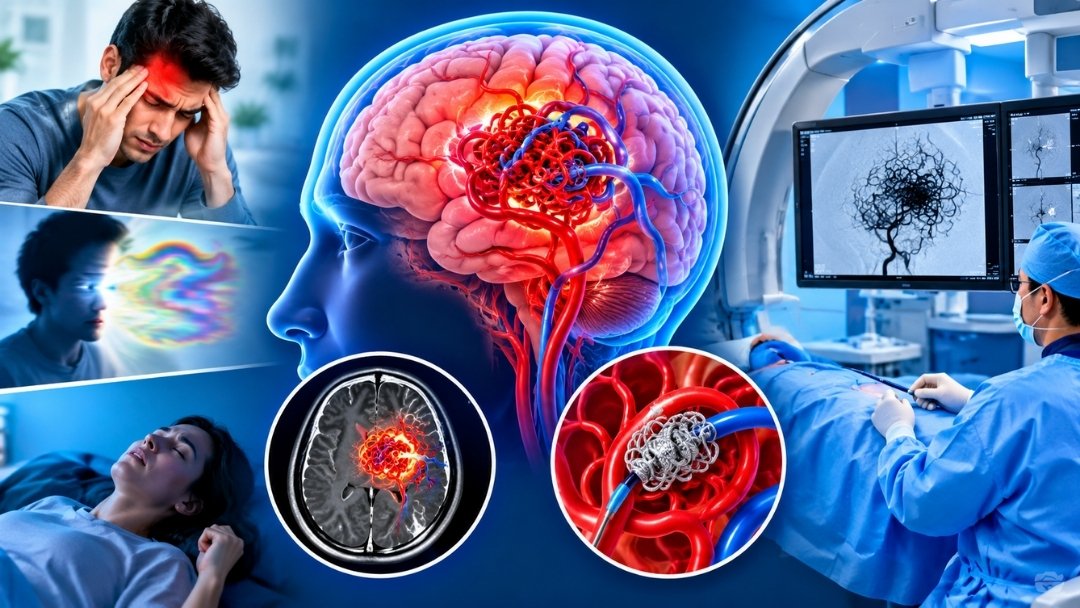
A brain arteriovenous malformation (AVM) is an abnormal connection between arteries and veins in the brain. Normally, blood flows from arteries through a network of tiny blood vessels called capillaries before reaching the veins. In an AVM, this normal capillary network is bypassed, creating an unusual connection between arteries and veins.
Some brain AVMs cause no noticeable symptoms and are discovered incidentally during imaging. Others may cause headaches, seizures, neurological symptoms, or bleeding. Early evaluation by an experienced specialist is important to understand the risks and determine whether treatment is necessary.
What Causes a Brain AVM?
Most brain AVMs are believed to develop before birth or during early development, although the exact cause is not fully understood. They are relatively uncommon, and many people may not know they have one until symptoms develop or medical imaging identifies it.
An AVM differs from a brain aneurysm. An AVM is an abnormal network of blood vessels, whereas an aneurysm is a bulging area in the wall of a blood vessel. Both conditions may require specialized cerebrovascular assessment.
Common Symptoms of a Brain AVM
Symptoms depend on the AVM's size, location, and whether bleeding or seizures occur.
Possible symptoms include:
-
Seizures
-
Persistent or unusual headaches
-
Weakness or numbness affecting part of the body
-
Difficulty speaking or understanding speech
-
Problems with balance or coordination
-
Changes in vision
-
Sudden neurological symptoms if bleeding occurs
Some AVMs do not cause any symptoms. However, a sudden severe headache, seizure, loss of consciousness, or new weakness requires immediate emergency medical assessment.
How Is a Brain AVM Diagnosed?
Accurate imaging helps specialists understand the AVM's location, blood supply, drainage pattern, and relationship to important brain structures.
1. CT Scan
A CT scan may be used in an emergency to assess suspected bleeding in the brain.
2. MRI of the Brain
MRI provides detailed images of brain tissue and can help identify an AVM and associated changes.
3. CT Angiography or MR Angiography
These investigations provide information about blood vessels and may help define the AVM's vascular anatomy.
4. Digital Subtraction Angiography (DSA)
DSA is a specialized catheter-based imaging procedure that can provide detailed information about the arteries feeding an AVM and the veins draining it. It may be essential for treatment planning.
The choice of investigations depends on the patient's symptoms and the findings from the initial evaluation.
Advanced Treatment Options for Brain AVMs
Not every AVM requires immediate intervention. Treatment decisions depend on factors such as the patient's age, symptoms, previous bleeding, AVM size and location, vascular anatomy, and the risks associated with treatment.
1. Endovascular Embolization
Endovascular embolization is a minimally invasive procedure in which a catheter is guided through the blood vessels to the AVM. A specialized material is then delivered to block selected abnormal vessels.
Embolization may be used as part of a broader treatment strategy or, in selected cases, as a definitive treatment. Its suitability depends on the AVM's anatomy and the clinical assessment.
2. Microsurgical Resection
In selected cases, a neurosurgeon may remove the AVM through an operation. The decision depends on the AVM's accessibility and the balance between treatment risks and the risk of leaving it untreated.
3. Stereotactic Radiosurgery
This technique delivers highly focused radiation to the AVM. The abnormal vessels may gradually close over time, rather than immediately. The treatment's suitability and expected time to obliteration depend on individual characteristics.
4. Observation and Monitoring
For some patients, careful observation with appropriate follow-up may be considered when the risks of intervention outweigh the anticipated benefits. The decision should be individualized and discussed with a cerebrovascular specialist.
Why Is a Multidisciplinary Assessment Important?
Brain AVM management may involve a cerebrovascular neurosurgeon, an endovascular specialist, a radiation specialist, and other healthcare professionals.
A multidisciplinary review helps compare available options, understand possible complications, and select a management plan based on the patient's individual circumstances.
Can Brain AVM Complications Be Prevented?
There is no guaranteed way to prevent a brain AVM from developing. However, patients with a diagnosed AVM should follow their specialist's recommendations, attend scheduled assessments, and seek urgent medical care if new neurological symptoms develop.
It is also important not to assume that every headache is caused by an AVM. New, persistent, or unusual headaches should be evaluated according to their severity and associated symptoms.
Conclusion
A brain arteriovenous malformation is a complex vascular condition that requires careful assessment. Depending on its characteristics, management may involve observation, endovascular embolization, microsurgery, stereotactic radiosurgery, or a combination of approaches.
Dr. Vivek Vaid, Brain & Spine Neurosurgeon and Endovascular Neurosurgeon, provides specialist evaluation for neurological and cerebrovascular conditions. Patients with a suspected or diagnosed brain AVM should seek an individualized assessment to understand the potential risks and available treatment options.
Medical disclaimer: This article is for educational purposes only and does not replace professional medical advice. Sudden severe headache, seizures, loss of consciousness, or new neurological symptoms require emergency medical attention.
Frequently Asked Questions
1. What is a brain AVM?
A brain AVM is an abnormal connection between arteries and veins that bypasses the normal capillary network.
2. Can a brain AVM exist without symptoms?
Yes. Some AVMs remain undetected until imaging is performed for another reason or symptoms develop.
3. Is endovascular embolization suitable for every brain AVM?
No. Suitability depends on the AVM's location, size, vascular anatomy, and the patient's overall clinical condition.
4. Is brain AVM treatment always necessary?
Not always. Some patients may be monitored, while others may benefit from intervention. The decision requires an individualized assessment of risks and benefits.
5. Is a brain AVM the same as a brain aneurysm?
No. An AVM is an abnormal connection between arteries and veins, while an aneurysm is a bulging area in a blood vessel wall. They are different conditions and may require different treatments.