 19 Oct, 2026
Brain Aneurysm Treatment: Symptoms, Diagnosis and Advanced Endovascular Care
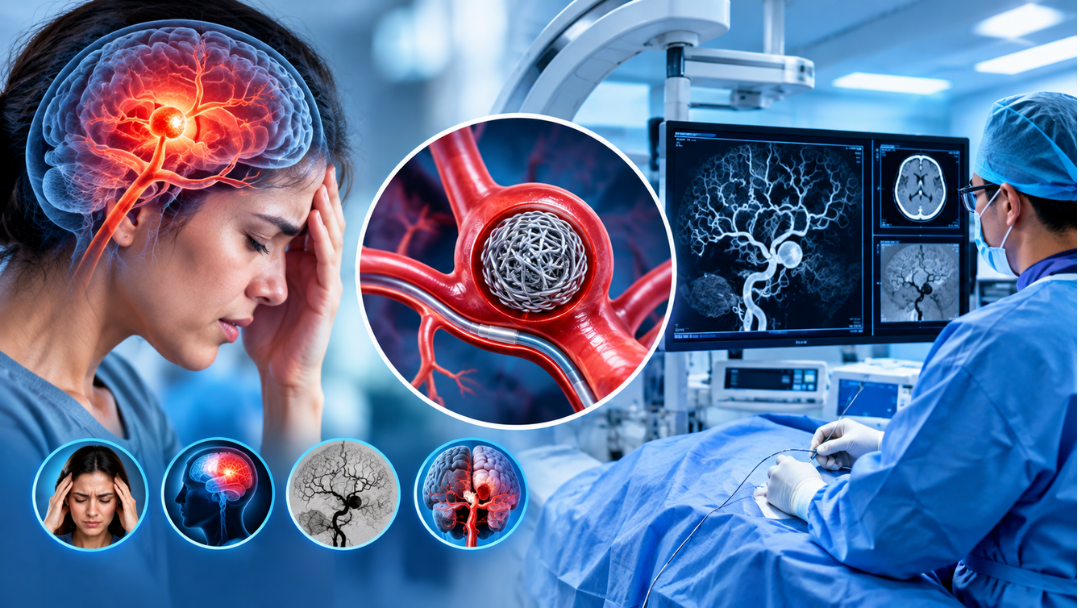
A brain aneurysm is a weak or thin area in the wall of a blood vessel in the brain that can bulge and fill with blood. Many brain aneurysms remain undetected because they may not cause symptoms. However, if an aneurysm ruptures, it can lead to a life-threatening condition requiring immediate medical attention.
Understanding the warning signs, diagnostic procedures, and available treatment options can help patients and families make informed decisions about brain health.
What Are the Common Symptoms of a Brain Aneurysm?
An unruptured brain aneurysm may not produce noticeable symptoms. When symptoms occur, they can depend on its size, location, and effect on nearby nerves.
Possible symptoms include:
-
Persistent or unusual headaches
-
Pain around or behind the eye
-
Double vision or other visual disturbances
-
Drooping eyelid
-
Numbness or weakness affecting one side of the face
A ruptured brain aneurysm often causes a sudden, extremely severe headache, sometimes described as the worst headache of a person's life. It may also cause vomiting, neck stiffness, confusion, seizures, or loss of consciousness. These symptoms require emergency medical care.
How Is a Brain Aneurysm Diagnosed?
Early and accurate diagnosis is essential for determining the appropriate management plan. Depending on the patient's symptoms and medical history, a specialist may recommend:
-
CT scan: Helps identify bleeding in the brain.
-
CT angiography (CTA): Provides detailed images of blood vessels to detect aneurysms.
-
MR angiography (MRA): Uses magnetic resonance imaging techniques to assess blood vessels.
-
Digital subtraction angiography (DSA): Provides detailed vascular images and may be recommended for treatment planning.
The choice of investigation depends on the clinical situation and the suspected condition.
Advanced Treatment Options for Brain Aneurysms
Treatment depends on the aneurysm's size, location, shape, risk of rupture, and the patient's overall health.
1. Endovascular Coiling
Endovascular coiling is a minimally invasive procedure in which a catheter is guided through the blood vessels to the aneurysm. Tiny coils are placed inside the aneurysm to help prevent blood from entering it.
2. Flow Diversion
A flow-diverting stent may be used in selected aneurysms to redirect blood flow away from the aneurysm and encourage gradual healing of the vessel wall.
3. Surgical Clipping
In suitable cases, a neurosurgeon may place a small clip at the base of the aneurysm to prevent blood from entering it.
4. Monitoring and Follow-Up
Some unruptured aneurysms may be monitored through periodic imaging and clinical assessments when the expected risks of intervention outweigh the benefits.
Why Consult a Brain and Endovascular Neurosurgeon?
Brain aneurysm management requires careful evaluation of vascular anatomy, rupture risk, treatment options, and individual patient factors. A brain and endovascular neurosurgeon can assess the available options and explain the potential benefits and risks of each approach.
Conclusion
Brain aneurysms require timely evaluation, particularly when symptoms suggest bleeding or rupture. Modern diagnostic imaging and endovascular techniques have expanded treatment options for selected patients. Early specialist assessment can help determine the most appropriate approach for each individual.
Consult Dr. Vivek Vaid, Brain & Spine Neurosurgeon and Endovascular Neurosurgeon, for professional evaluation of brain and vascular conditions.
Medical disclaimer: This article is for educational purposes and does not replace professional medical advice. Sudden severe headache or suspected brain aneurysm rupture requires immediate emergency assessment.
Frequently Asked Questions
1. Can a brain aneurysm exist without symptoms?
Yes. Many unruptured brain aneurysms do not cause noticeable symptoms and may be discovered during imaging performed for another reason.
2. Is endovascular coiling a major surgery?
It is a minimally invasive, catheter-based procedure rather than open brain surgery. Its suitability depends on the aneurysm and the patient's condition.
3. Can every brain aneurysm be treated with coiling?
No. Treatment depends on the aneurysm's anatomy, location, size, and other clinical factors.
4. When should I seek emergency medical attention?
Seek emergency care immediately for a sudden, extremely severe headache, especially if accompanied by vomiting, neck stiffness, weakness, seizures, or loss of consciousness.