 16 Oct, 2026
Brain Aneurysm: Symptoms, Diagnosis and Advanced Endovascular Treatment
A brain aneurysm is a condition in which a weak area of a blood vessel in the brain develops a bulge. While some aneurysms remain unnoticed for years, others may grow, leak, or rupture, potentially leading to serious complications. Understanding the symptoms, diagnostic procedures, and available treatment options can help patients make informed decisions about their neurological health.
Dr. Vivek Vaid, Brain & Spine Neurosurgeon and Endovascular Neurosurgeon, has professional interests in neurosurgical and neurovascular conditions. Patients diagnosed with a brain aneurysm should seek an individualised medical evaluation to understand the condition and the appropriate treatment options.
What Is a Brain Aneurysm?
A brain aneurysm, also called a cerebral aneurysm, develops when a weakened section of an artery wall bulges outward. Aneurysms differ in size, shape, and location. Some are discovered incidentally during brain imaging, while others are identified after symptoms develop.
Factors associated with an increased risk of brain aneurysms include high blood pressure, smoking, family history, and certain inherited conditions. However, aneurysms can also develop in individuals without recognised risk factors.
Common Symptoms of a Brain Aneurysm
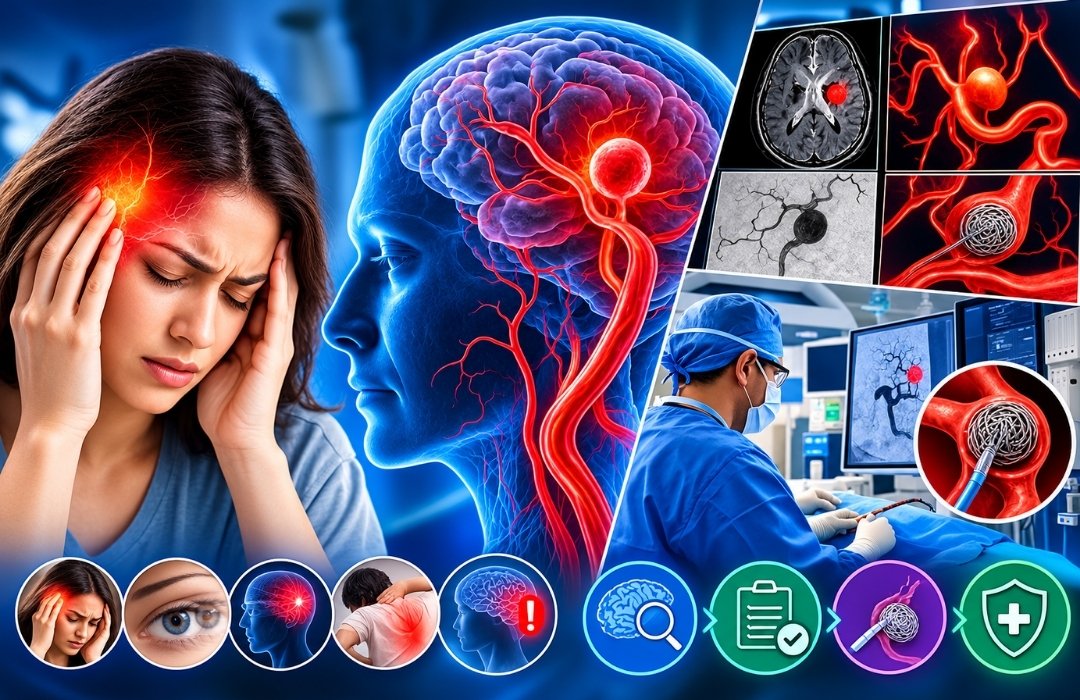
Many unruptured brain aneurysms do not cause noticeable symptoms. When symptoms occur, they may include:
-
Persistent or unusual headaches.
-
Pain around or behind the eye.
-
Double vision or other visual changes.
-
Drooping of an eyelid.
-
Numbness or weakness affecting the face.
-
Difficulty with certain eye movements.
A ruptured aneurysm can cause bleeding around the brain and requires emergency medical attention. A sudden, extremely severe headache, especially one that reaches maximum intensity rapidly, may be a warning sign. Vomiting, neck stiffness, seizures, loss of consciousness, or new neurological weakness can also occur.
If these symptoms develop suddenly, seek emergency medical care immediately.
How Is a Brain Aneurysm Diagnosed?
Accurate diagnosis helps specialists assess the aneurysm and determine the appropriate management approach.
CT Scan: A CT scan may help identify bleeding in or around the brain, particularly in an emergency.
CT Angiography (CTA): This investigation produces detailed images of blood vessels and can help identify an aneurysm.
MR Angiography (MRA): This technique uses magnetic resonance imaging to evaluate blood vessels and may be used for diagnosis or follow-up.
Digital Subtraction Angiography (DSA): This specialised procedure provides detailed information about the aneurysm and surrounding blood vessels when further vascular assessment is required.
The choice of investigation depends on the patient's symptoms and clinical circumstances.
What Are the Treatment Options for a Brain Aneurysm?
Treatment depends on the aneurysm's size, location, shape, risk of rupture, and the patient's overall health. Not every aneurysm requires immediate intervention.
1. Monitoring and Regular Follow-Up
Some unruptured aneurysms may be monitored through periodic imaging. A specialist may also recommend controlling blood pressure and stopping smoking where applicable.
2. Endovascular Coiling
Endovascular coiling is a catheter-based procedure in which a thin tube is guided through the blood vessels toward the aneurysm. Small coils are then placed inside the aneurysm to encourage clot formation and reduce blood flow into it.
This technique may be suitable for selected aneurysms, depending on their anatomy and other clinical factors.
3. Surgical Clipping
Surgical clipping involves placing a small clip across the aneurysm's neck to prevent blood from entering it. This procedure requires surgery and may be recommended for certain aneurysms based on their characteristics.
4. Other Endovascular Procedures
Selected aneurysms may be treated using specialised devices, including flow-diverting stents. The choice of technique requires careful evaluation of the aneurysm, its surrounding vessels, and the potential risks and benefits.
The Role of an Endovascular Neurosurgeon
Endovascular neurosurgery involves treating selected conditions affecting blood vessels in the brain through catheter-based techniques. These procedures may be used for certain aneurysms, arteriovenous malformations (AVMs), and other neurovascular abnormalities.
The objective is to select an approach that addresses the condition while considering the patient's individual medical needs. Endovascular treatment is not suitable for every aneurysm, and conventional surgery or monitoring may be more appropriate in some cases.
Why Individualised Treatment Matters
Every brain aneurysm is different. Treatment decisions require consideration of the patient's symptoms, imaging findings, medical history, age, and overall health.
A specialist consultation can help patients understand their diagnosis, the potential risks of treatment or observation, and the available alternatives. Patients should also discuss follow-up requirements and the possibility of additional treatment when appropriate.
Frequently Asked Questions
Can a brain aneurysm exist without symptoms?
Yes. Many unruptured aneurysms do not produce symptoms and may be discovered during imaging for another condition.
Does every brain aneurysm require surgery?
No. Some aneurysms may be monitored, while others require endovascular treatment or surgical clipping.
Is endovascular coiling suitable for everyone?
No. Suitability depends on the aneurysm's size, shape, location, and other individual clinical factors.
When is emergency care necessary?
A sudden, extremely severe headache, loss of consciousness, seizures, or new neurological weakness requires immediate emergency assessment.
Conclusion
Brain aneurysms require careful diagnosis and an appropriate management plan. Understanding the warning signs and available treatment approaches can help patients take informed steps toward protecting their neurological health.
Dr. Vivek Vaid's neurosurgical and endovascular expertise is relevant to the evaluation of selected brain and neurovascular conditions. Patients diagnosed with an aneurysm should consult a qualified specialist to discuss their individual diagnosis and treatment options.